

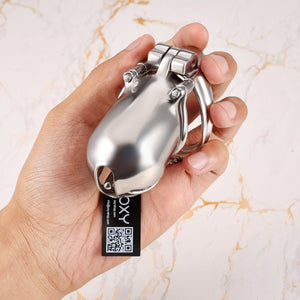
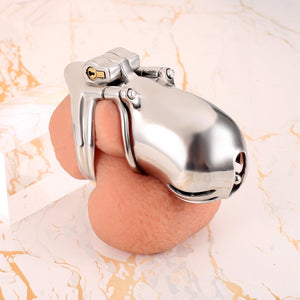
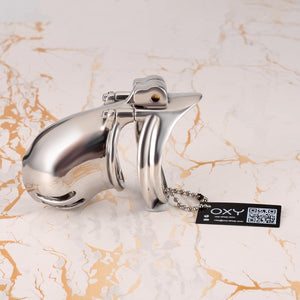
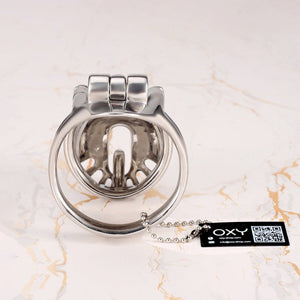
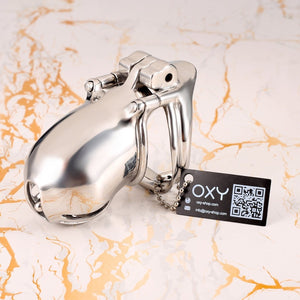
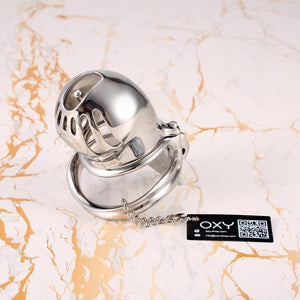
Obsidian PA – Custom Steel Chastity Cage with Integrated PA Lock

Please Choose the Variants If there are

Obsidian PA – Custom Steel Chastity Cage with Integrated PA Lock

The Obsidian PA is the embodiment of absolute control — smooth, enclosed, and unyielding.

Each cage iscustom-made to your measurements,3D printed in surgical-grade stainless steel, andhand-finished to a deep mirror polish worthy of its name.

Its defining element is the integrated Prince Albert lock, forged directly into the cage’s structure. This precision-engineered mechanism ensures complete security — no movement, no escape, only seamless connection between wearer and steel.

Inspired by the dark elegance of obsidian stone, its fluid lines and enclosed form offer unmatched comfort and total confinement. Designed for long-term wear, the Obsidian PA combines ergonomic precision with a sculptural, commanding presence.

INSTRUCTIONS ON HOW TO MEASURE


Why You Should Get This Cage

  • Fully custom-made to your anatomy

  • Integrated PA lock for ultimate security and stability

  • 3D printed in surgical-grade stainless steel

  • Hand-polished for flawless comfort and a deep metallic shine

  • Ergonomic enclosed design for long-term wear

  • Built for total control and unbreakable connection

✦ Optional Try-Before-You-Lock: Nylon 3D printed Fit Cage - PROTOTYPE

Want to make sure your custom cage fits perfectly?

Before we craft your device in solid stainless steel or titanium, you can choose to receive a nylon fit replica — an exact 3D-printed model of your future cage. This allows you to test the sizing, base ring, and overall comfort before final production.

This option is highly recommended, especially for first-time custom orders.

Fit prototypes are non-functional sizing tools made solely for measurement testing — they lack the final polish, aren’t meant for long-term wear, and help us perfect your final design.


Material:

Stainless Steel 316 Medical Grade;Non-porous, body-safe, and rust-free.

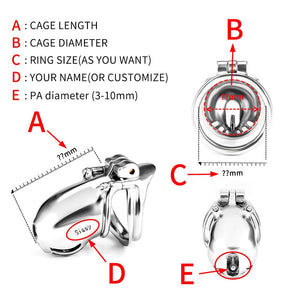
HOW TO MEASURE YOURSELF

Measuring needs to be done several times during the day and then average out. Measure while you are flaccid.

Total Cage Length: Take a ruler and place it on the underside of your flaccid penis, measuring from tip to base. You should be completely flaccid when taking this measurement. For accurate results, take this measurement several times throughout the day, Remove 1/4 inch or 6mm from this measure.

The shaft inside diameter: Measure with a tapeline around the penis shaft - tighten just a little. Divide by 3.14 to get the diameter and add an extra 0.11 inch or 3mm

Base Ring Size: Take an inextensible cord, and tighten it around your penis and balls, so you can put only one finger beneath it. Take the length of this segment.
Alternatively, you can measure with a dressmaker's tape. Divide by 3.14 and get the diameter.


You are the sole responsible for your measurements. We do not accept returns or claims if a device does not fit.
We will make the device with a possibledeviation from 1 to 5 mm depending on device.

Every custom chastity cage is designed and made to order. Please allow 2-6 weeks for this process to happen.

Chastity Device Warranty
How to put on a chastity device

Frequently Asked Questions

A PA lock chastity cage is a male chastity device that secures through a Prince Albert piercing instead of relying only on the cage and base ring. The main benefit is stability. A properly designed integrated PA lock reduces internal movement, makes slipping out much harder, and creates a more fixed connection between the wearer and the device. This style is best for people who already have a healed Prince Albert piercing and want a higher-security chastity setup for long-term wear, stricter control, or a more serious submission dynamic. The Obsidian PA is built around that concept, with the locking mechanism integrated directly into a custom stainless steel cage rather than added as a separate attachment. The tradeoff is that PA cages are not beginner-friendly if you do not have the piercing, and precise measurements matter even more than with standard chastity cages. They also require good hygiene, body awareness, and realistic expectations about comfort during adaptation. For experienced wearers who want more security and less movement, this type of cage is often a strong choice.
A custom steel chastity cage is usually better if fit, long-term comfort, and security are your top priorities. Off-the-shelf cages can work for experimentation, but they are made to general sizes. That often means compromises in ring fit, cage length, internal diameter, and overall stability. A custom model like the Obsidian PA is made to your anatomy using your measurements. That matters because small differences in base ring diameter, shaft clearance, and cage length can affect daily comfort, circulation, chafing, and whether the cage stays secure during movement. Surgical-grade stainless steel also offers a durable, non-porous surface that is easier to keep clean than many lower-end materials. The tradeoff is that custom cages require accurate measuring and a longer production timeline. They also are not ideal for someone who is still figuring out what size or style they like. If you are new, a fit prototype can help. If you already know you want a serious chastity device for regular wear, custom is often the more reliable option.
It can be healthy for some people to wear a chastity cage long term if the fit is correct, the material is body-safe, and hygiene and circulation are monitored carefully. The biggest factors are proper sizing, daily cleaning, and paying attention to warning signs like numbness, discoloration, swelling, persistent pain, or skin breakdown. A well-made custom device can improve the odds of safer long-term wear because it reduces pressure points and unwanted movement. The Obsidian PA uses medical-grade 316 stainless steel, which is non-porous and rust-resistant, and its enclosed ergonomic shape is intended for extended wear. A custom fit matters here because a cage that is too tight or too loose can both create problems. Long-term wear is best for people who understand their body, can remove the device if needed, and are committed to safe BDSM practices. It is not a substitute for medical advice, and anyone with a piercing should also make sure the Prince Albert is fully healed before using a PA-based cage. Start gradually and prioritize health over endurance.
The best way to know if a custom chastity cage will fit correctly is to measure carefully, more than once, while fully flaccid, and use those averages to choose your final dimensions. The key measurements are total cage length, shaft diameter, and base ring size. Small errors can change comfort a lot, especially on a rigid steel cage. For the Obsidian PA, the recommended process is to measure several times throughout the day and average the results. The listed guidance also includes specific adjustments, such as subtracting about 1/4 inch or 6 mm from flaccid length and adding about 0.11 inch or 3 mm to shaft diameter after calculating it. Base ring size should be measured around the penis and balls with a snug but not overly tight fit. If you are unsure, a nylon fit prototype is one of the safest ways to test sizing before final production. That is especially useful for first-time custom buyers or anyone moving to a PA-integrated cage, where precision and comfort matter more than with basic beginner devices.
Stainless steel is popular for chastity cages because it is durable, non-porous, body-safe when properly finished, and easy to clean. Compared with softer or cheaper materials, it resists wear better, holds its shape, and gives a more solid locked-in feel that many users want for control-focused play or lifestyle wear. The Obsidian PA is made from 316 medical-grade stainless steel and hand-polished to a smooth mirror finish. That matters because surface quality affects daily comfort. A rough finish can create friction and hotspots, while a polished surface is typically easier on the skin and simpler to rinse and maintain. Steel also has psychological appeal for many wearers because it feels more permanent, disciplined, and secure than plastic or silicone. The tradeoffs are weight, rigidity, and travel concerns. Steel has no flexibility, so sizing must be right. It can also feel colder at first and may be less forgiving for complete beginners. For people who want a serious, long-lasting chastity device, stainless steel is often one of the strongest material choices.
You can physically travel while wearing a chastity cage, but going through TSA or airport security with a metal chastity cage is risky if privacy matters. A stainless steel device may trigger metal detectors or become visible during body scanning, which can lead to additional screening and uncomfortable questions. Because the Obsidian PA is a custom steel chastity cage made from medical-grade stainless steel, it should be treated as detectable metal for travel planning. There is no reliable way to guarantee that airport screening will ignore it. Even if one checkpoint is uneventful, another may not be. For most people, the practical advice is simple: do not wear a metal chastity cage through airport security if discretion is important. If travel is necessary, discuss removal plans with your keyholder in advance and think through backup options before leaving. This is especially important with PA-based designs, where removal may be less casual than with standard cages. Privacy, compliance, and safety should come first.
Yes, metal detectors can detect chastity cages, especially if the device is made from stainless steel. Detection is never something you should assume will or will not happen because airport systems, courthouse scanners, venue security, and handheld detectors vary widely in sensitivity. A device like the Obsidian PA is made from 316 stainless steel and includes an integrated locking structure, so it should be considered detectable metal. In addition to walk-through detectors, modern body scanners may also show the shape or outline of an object worn under clothing, which can prompt secondary screening. For shoppers choosing between materials, this is one of the main tradeoffs between steel and lightweight non-metal alternatives. Steel offers durability, security, and a premium finish, but it is not the discreet choice for security checkpoints. If your priority is strict control at home, steel makes sense. If your priority is travel discretion, you may want a separate travel-friendly option rather than relying on a metal cage.
An integrated lock is built into the structure of the cage rather than added as a separate external lock point. In practice, that usually means fewer moving parts, a cleaner profile, and a more secure feeling fit. It can also reduce shifting because the locking system becomes part of the actual design instead of an attachment. On the Obsidian PA, the integrated Prince Albert lock is the defining feature. It is engineered directly into the custom steel cage, which helps create a stable connection with minimal movement. For many experienced wearers, that matters more than just visual style. Less internal play can improve comfort during daily wear and make escape attempts more difficult. The tradeoff is that integrated systems demand more precision. The cage needs to be made correctly for your anatomy, especially with a PA setup. This type of design is ideal for wearers who want a stricter, more permanent-feeling form of control. It is less suitable for casual experimentation or anyone still deciding what size, style, or locking approach works best for them.
A PA chastity cage is usually not the easiest starting point for complete beginners. It is best suited to people who already have a fully healed Prince Albert piercing and want a more advanced, more secure chastity setup. The learning curve is steeper because fit, hygiene, and body awareness all matter more with a piercing-based design. That said, a beginner to chastity who already has PA experience may still choose this style if they want higher stability and lower escape potential from the start. The Obsidian PA is custom-made and designed for long-term wear, which helps with comfort compared with generic rigid cages. The optional nylon fit prototype is especially helpful here because it lets you test sizing before the final steel version is produced. If you are completely new to chastity and do not have a Prince Albert piercing, a standard non-PA cage is usually the simpler path. If you do have the piercing and want serious control, a custom PA cage can be an excellent next step, provided you measure carefully and ease into wear responsibly.
A stainless steel PA chastity cage should be cleaned regularly with warm water and mild soap, then dried thoroughly before continued wear. Because PA-based devices involve a piercing, cleanliness is even more important than with standard cages. Routine rinsing helps remove sweat, skin oils, and residue that can lead to odor, irritation, or skin problems. The Obsidian PA uses non-porous 316 medical-grade stainless steel, which is a strong material choice for hygiene because it does not absorb moisture the way porous materials can. Its polished finish also makes it easier to wipe down and inspect. During cleaning, check for redness, pressure marks, swelling, or any sign that the fit is no longer comfortable. Good maintenance also means using the cage realistically. Remove it when needed for deeper cleaning if your dynamic allows, and never ignore pain or circulation issues. For long-term wearers, a consistent hygiene routine matters just as much as material quality. A premium steel cage can support easier care, but safe wear still depends on attentive daily habits.