




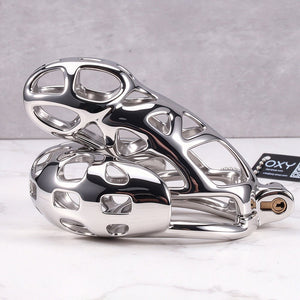
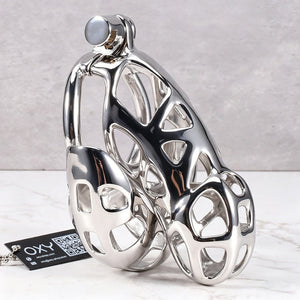



STEEL The Guardian med skål til testiklene - polert stål

Vennligst velg variantene hvis det finnes

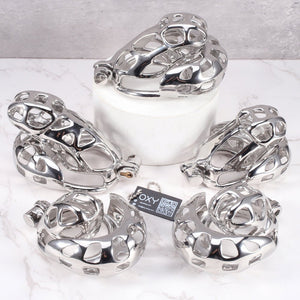
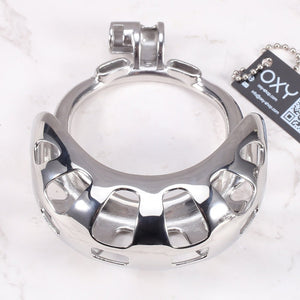
Du skal ha på deg det Jeg velger, og The Guardian skal sørge for at du husker det. Dette imponerende buret er laget av håndpolert 316L-rustfritt stål og forener skulpturell eleganse med kompromissløs kontroll.

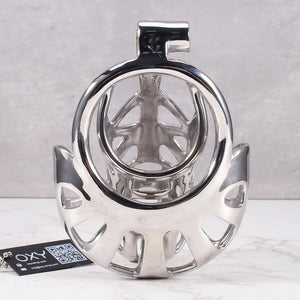
Det karakteristiske skallet omslutter testiklene, mens det intrikate gitterburet overlater lite til fantasien. Hver kurve er gjennomtenkt, hver detalj utformet for å gjøre tvang til en kunstform.

The Guardian finnes i flere størrelser, slik at du kan finne passformen som passer til anatomien din og Mistrissens forventninger. Velg med omhu. Når buret først er låst, er det ikke lenger du som bestemmer over nytelsen din.

Ditt begjær. Mine regler. Nøkkelen din tilhører Meg.

Produktegenskaper

  • Eksklusivt 316L-rustfritt stål: Slitesterkt, korrosjonsbestandig rustfritt stål med eksklusiv metallisk finish.
  • Håndpolert til perfeksjon: En svært reflekterende, speillignende overflate som fremhever burets skulpturelle design.
  • Integrert skall rundt testiklene: En omsluttende struktur utformet for å omgi testiklene som del av kyskhetsanordningen.
  • Karakteristisk åpen ramme: Intrikate geometriske åpninger gir et futuristisk uttrykk.
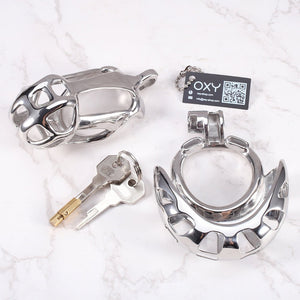
  • Låsbar konstruksjon: Utformet for trygg kyskhetslek, med låsemekanisme og nøkler inkludert.
  • Solid metallfølelse: Opplev den solide tyngden og betryggende tilstedeværelsen til en enhet i rustfritt stål.
  • Utformet for dedikerte kyskhetsentusiaster: Et blikkfang for personlig disiplin, samtykkende maktutveksling og utforskning av kyskhet over lengre tid.

Få størrelsesanbefalinger fra vår anonyme AI:

Dette er standardstørrelser for kyskhetsburet The Guardian. Hvis du ønsker å få det laget i en størrelse som er tilpasset deg, kan du besøke denne siden: TILPASSET KYSKHETSBUR I STÅL - THE GUARDIAN

Dette buret er laget av rustfritt stål 316L av medisinsk kvalitet og er et av de mest komfortable og solide vi har laget. Denne modellen finnes i flere størrelser du kan velge mellom. Svært solid og robust, egnet for langvarig bruk som kyskhetsbur.

Den inkluderer ett bur, én ring og én integrert lås, klar til bruk.


Mål for baseringen

Mål omkretsen rundt penis bak testiklene. Du kan bruke et målebånd av stoff (slik skreddere bruker) for å ta målet, eller bruke en snor og en linjal hvis du ikke har et. Vikle målebåndet eller snoren rundt penis, bak testiklene. Båndet skal sitte tett, men ikke stramt.

Nå som du har omkretsen, må du dele den på 3.14 for å finne diameteren. Nedenfor har vi laget noen eksempelberegninger som viser hvordan det fungerer:

I tommer: 7 inches ÷ 3.14 = 2.25 inches diameter
6.25 inches ÷ 3.14 = 2 inchesdiameter
5.5 inches ÷ 3.14 = 1.75 inches diameter
4.7 inches ÷ 3.14 = 1.5 inches diameter

Mål for burets rør

Ideelt sett bør buret være akkurat langt nok til at tuppen av penis hviler mot enden av buret.

Legg en linjal på undersiden av den slappe penis, og mål fra tuppen til roten. Ikke press linjalen inn mot pungen, da får du et feilaktig mål. La bare linjalen berøre huden der. Du bør være helt slapp når du tar målet, men ikke «trukket inn i kroppen fordi det er kaldt eller skremt»-slapp. For å få et nøyaktig resultat bør du ta målet flere ganger i løpet av dagen for å finne den vanligste lengden din. Når du har funnet målet, trekker du fra ¼ til ½ tomme fra det endelige resultatet. Dette blir den ideelle lengden på buret.

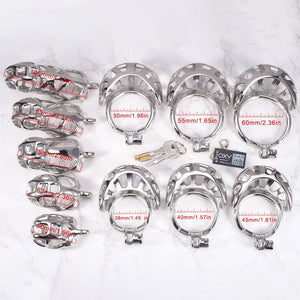
STØRRELSER OG ALTERNATIVER: 

  • Burens lengder

    • 50 mm (1.96 in)
    • 60 mm (2.36 in)
    • 75 mm (2.95 in)
    • 85 mm (3.34 in)
    • 105 mm (4.13 in)

    Innvendige diametre på baseringene

    • 38 mm (1.49 in)
    • 40 mm (1.57 in)
    • 45 mm (1.81 in)
    • 50 mm (1.96 in)
    • 55 mm (2.17 in)
    • 60 mm (2.36 in)

Viktig informasjon! Lengden på enhetene kan variere på grunn av den kompliserte produksjonsprosessen.


Garanti for penisbur


Ofte stilte spørsmål

Men wear chastity cages for a mix of psychological, relationship, and practical reasons. The main appeal is giving up control of arousal and orgasm, which can heighten submission, anticipation, and mental focus. For some couples, chastity supports consensual power exchange, accountability, or structured discipline. For solo users, it can also be part of self-restraint, habit control, or submissive training. A steel design like the STEEL The Guardian With Balls Shell is often chosen by people who want a more serious, secure feel than lightweight plastic alternatives. It uses a stainless steel 316L body with an integrated lock, which suits users who want a sturdy device for longer-term wear and a stronger sense of physical restriction. This type of device tends to work best for beginners who want a durable first cage and experienced users who care about comfort, fit options, and a more ownership-focused experience. The tradeoff is that chastity is not just about the device. It only works well when sizing, communication, hygiene, and safety are handled properly.
There is no single safe wear time that fits everyone. It depends on fit, material, experience level, hygiene, activity, and how your body responds. Beginners usually start with short sessions of a few hours, then build up gradually. Longer wear is only realistic when the cage fits correctly, allows normal circulation, and can be cleaned regularly. The Guardian is designed for long-term chastity wear because it is made from medical-grade 316L stainless steel and has a solid one-ring, one-cage setup with an integrated lock. That said, a well-built cage is not a substitute for body awareness. If you feel numbness, pinching, swelling, discoloration, broken skin, or persistent pain, it should be removed immediately. This product is best for users who want a sturdy steel cage and are willing to measure carefully before buying. The biggest safety factor is correct sizing, especially ring diameter and cage length. A device that is too tight, too long, or too wide is much more likely to cause problems than one that is properly fitted.
The right size comes down to two measurements: the base ring and the cage tube. For the base ring, measure the circumference around the penis and behind the balls with a soft tape or string, then divide that number by 3.14 to get the diameter. For the cage tube, measure the underside of your fully flaccid penis from base to tip, then subtract about 1/4 to 1/2 inch to get a comfortable chastity length. The Guardian gives several cage size options, from XS at 55 mm total length up to XL at 109 mm, plus ring sizes from 43 mm to 62 mm. That makes it useful for shoppers who already know they need either a shorter cage for a tighter fit or a longer option for more internal room. This works best for users who want to dial in fit instead of guessing. The main tradeoff is that steel chastity is less forgiving than softer materials, so accurate measuring matters more. If you are between sizes, most users prefer prioritizing ring comfort and a cage length that is snug without forcing pressure.
Steel is often better for users who want durability, weight, and a more secure, premium feel, while plastic can be lighter and more beginner-friendly in some situations. For long-term wear, many experienced users prefer steel because it is sturdier, more resistant to cracking, and usually feels more serious in a power exchange context. The Guardian is made from medical-grade 316L stainless steel, which is a common choice for body-safe adult gear because it is strong, smooth, and easier to sanitize than many porous materials. It is especially suited to people who want a cage that feels solid and stable over time, not flimsy or disposable. The tradeoff is weight and rigidity. Steel has less flexibility, so a poor fit becomes obvious faster than with softer alternatives. It is also not always the best first choice for someone who is highly sensitive to weight or wants a very discreet, ultra-light device. If your priority is structure, security, and long-term use, steel is usually the stronger option.
Choose the smallest ring size that stays comfortable without causing pinching, numbness, or restricted circulation. A good ring should hold the cage in place behind the scrotum and penis base, but it should not dig into the skin or create persistent pressure. If the ring is too large, the cage may slip or rotate too much. If it is too small, it can become unsafe quickly. The Guardian offers ring sizes of 43 mm, 47 mm, 50 mm, 55 mm, and 62 mm. To find your size, measure the circumference around the penis and behind the balls, then divide by 3.14 to convert to diameter. This gives you a practical starting point rather than guessing based on body type alone. This matters most for users planning regular or longer wear, since ring fit affects comfort more than many beginners expect. If you are deciding between sizes, the better approach is to choose based on actual measurement and comfort goals, not on the idea that tighter always means more secure. Proper fit is what makes a chastity cage wearable.
Yes, it can be a good beginner option if the buyer is comfortable with steel and takes sizing seriously. The Guardian keeps the setup relatively straightforward by including one cage tube, one ring, and an integrated lock, so there are fewer loose parts to manage than on some multi-component designs. It also comes in several cage lengths and ring diameters, which helps new users find a closer fit. Its medical-grade 316L stainless steel build is a plus for beginners who want something durable, hygienic, and more secure-feeling than lighter novelty cages. At the same time, steel is less forgiving than silicone or soft plastic if you get the size wrong. That means it is beginner-friendly in design, but not something to buy blindly. It is best for first-time users who want a serious male chastity device rather than a temporary experiment. The tradeoff is that it may feel more intense, heavier, and more restrictive than entry-level alternatives. Starting with short wear sessions and checking comfort often is the smart approach.
Male chastity is more common than many people assume, especially within BDSM, female-led relationships, orgasm control dynamics, and online kink communities. It is still a niche practice compared with mainstream sex toys, but awareness has grown a lot because of better product availability, more open discussion of consensual power exchange, and the popularity of structured submission dynamics. Many users are not looking for pain or extreme play. They are looking for control, delayed gratification, ritual, or a physical symbol of devotion. Products like the Guardian fit that demand because they combine practical restraint with a more intentional ownership or discipline mindset. A steel cage with an integrated lock tends to appeal to people who want chastity to feel meaningful, not casual. For shoppers wondering whether this interest is unusual, the better question is whether the device matches their goals. If you want denial, accountability, and controlled arousal in a consensual setting, male chastity is a recognized and established part of kink culture. The key is choosing a safe, well-fitted device and using it with clear communication.
A metal chastity cage can trigger airport security scanners, so traveling while wearing one is risky if privacy matters to you. There is no guaranteed way to pass through screening unnoticed, especially with stainless steel devices. Policies and screening outcomes can vary by airport, country, scanner type, and the judgment of security staff. Because the Guardian is made from stainless steel 316L and includes an integrated lock, it is more likely to be detected than some non-metal alternatives. That makes it a poor choice for anyone specifically looking for a travel-friendly chastity device. If discretion during air travel is a top concern, many shoppers choose to remove the device before security or look at non-metal options instead. This matters most for long-term wear users who want to stay locked during trips. The tradeoff is simple: steel gives security and durability, but not stealth in airport screening environments. If you do travel with any chastity device, have a practical plan for removal, storage, and privacy before you reach security.
Its main long-term wear advantages are material quality, structural simplicity, and size choice. The Guardian is made from medical-grade 316L stainless steel, which is strong, non-porous, and easier to clean than many cheaper materials. It also uses a straightforward one-cage, one-ring design with an integrated lock, which reduces extra parts that can shift, loosen, or complicate daily use. It is also offered in multiple cage lengths, from XS to XL, and in several ring diameters. That matters because long-term wear depends far more on accurate fit than on any single design feature. A shorter, better-fitted cage usually performs better for all-day control than an oversized one that allows too much movement. This cage is best for users who want a durable steel option for ongoing chastity rather than occasional novelty play. The limitation is that no cage is automatically comfortable for long wear just because it is steel. Long-term use only makes sense when the device fits correctly, the skin stays healthy, and the wearer can maintain regular hygiene and circulation checks.
Most users should choose a cage that closely matches their normal flaccid size, then go slightly shorter for a secure fit. A chastity cage generally works best when the tip of the penis can rest near the end of the cage without being crushed or forced. If the cage is too long, it may allow uncomfortable movement, partial erections, or a loose fit. If it is too short, it can create pressure and irritation. The Guardian range is useful here because it includes shorter options like XS at 55 mm and S at 64 mm, along with longer options such as M, L, and XL. The product guidance recommends measuring the underside of the flaccid penis from base to tip and then deducting about 1/4 to 1/2 inch to find your ideal cage length. Shorter cages usually suit users who want stronger control and less internal shifting. Longer cages may suit users with more length at rest or those who find very compact cages too restrictive. The goal is not maximum tightness. It is stable, wearable control with room for normal body movement.