

Le verrou à cinq doigts — Attachez la main, prenez le contrôle du reste

Choisis les variantes s'il y en a

Pas besoin d’une corde autour des poignets pour ôter tout contrôle. Parfois, la main elle-même suffit.

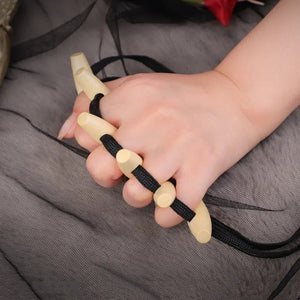
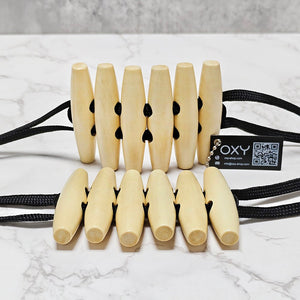
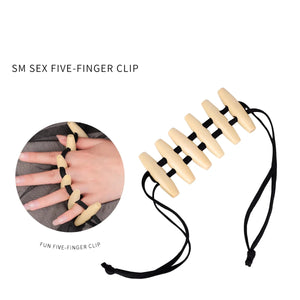
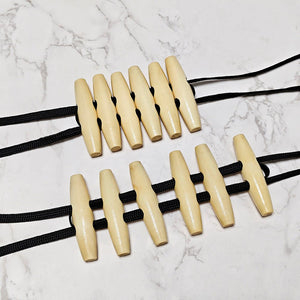
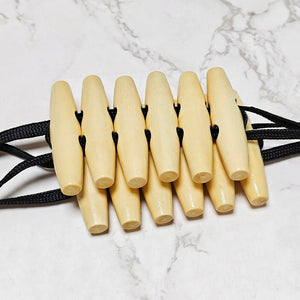
Le Verrou à cinq doigts place des chevilles en bois lisses entre chaque doigt, en alternant dessus et dessous le long d’un cordon tressé qui se resserre d’une seule traction. Une fois en place, la main est immobilisée - les doigts écartés et maintenus exactement là où on les a placés. Impossible de serrer le poing ou de résister en s’agrippant. Juste du bois, de la tension et une main qui obéit désormais à quelqu’un d’autre.

Assez compact pour se glisser dans un sac, assez discret pour être utilisé n’importe où et assez précis pour que « ne bouge pas » ne soit plus une option. Qu’il serve à garder les mains à l’écart, à imposer une petite discipline à lui seul ou à être utilisé lentement, doigt après doigt, comme une forme de taquinerie à part entière, ce dispositif réduit la contrainte à sa forme la plus simple et la plus délibérée.

Petit objet. Contrôle total.


✨ Ce qui le distingue

  • La structure composée de chevilles en bois alternées maintient chaque doigt dans une position fixe et séparée - bien plus restrictive qu’une simple corde.
  • Le cordon à serrage par traction unique permet de passer d’un maintien lâche à un verrouillage en quelques secondes, en contrôlant parfaitement le degré de serrage.
  • Compact et facile à emporter - pas de montage ni d’installation, juste du bois et un cordon qui se rangent à plat.
  • La finition lisse, sans échardes, du bois naturel procure une sensation ferme sans agresser la peau.
  • Peut servir à une discipline légère ou à faire monter lentement l’excitation, selon le serrage et la durée pendant laquelle il reste en place.

📏 Tailles / Dimensions

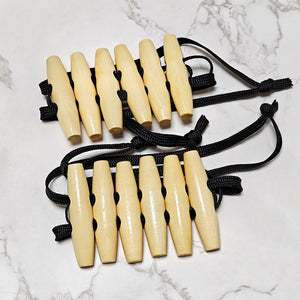
  • Chevilles en bois individuelles
  • Cordon : mécanisme de serrage réglable à une seule traction
  • S’adapte à la plupart des mains adultes grâce au laçage réglable

🧠 L’expérience

Il y a une immobilité particulière qui s’empare d’une main une fois lacée et serrée - les doigts écartés, incapables de saisir quoi que ce soit, bons seulement à attendre. Le Verrou à cinq doigts n’a pas besoin d’envelopper tout le corps pour faire passer son message. Une seule main et quelques secondes lui suffisent pour vous faire comprendre le reste.

Foire aux questions

Hand restraint devices generally fall into a few main categories: wrist cuffs, rope restraints, mitts or enclosed hand restraints, spreader-style restraints, and finger-based restraint tools. Wrist cuffs focus on restricting overall arm movement. Rope offers flexible positioning but usually takes more setup and skill. Mitts block hand use by enclosing the hand, while spreaders force the hand or limbs into a set position. The Five-Finger Lock fits into the finger restraint category. Instead of binding the wrist, it threads smooth wooden dowels between the fingers and tightens with a single-pull cord. That separates the fingers and prevents gripping, clenching, or making a fist. It is best for people who want precise hand control without full-body rigging. This type works especially well for BDSM scenes centered on stillness, teasing, discipline, or removing fine motor control. The tradeoff is that it controls the hand itself rather than immobilizing the entire arm, so it is often best used alone for focused play or paired with other bondage gear for fuller restraint.
Good alternatives to wrist restraints include finger restraints, bondage mitts, arm binders, handcuff-style cuffs with spreaders, and positional bondage setups. The best option depends on whether you want to stop large arm movement, fine hand movement, or both. A finger restraint like The Five-Finger Lock is a strong alternative when the goal is to make the hand unusable without wrapping rope around the wrists. It works by placing wooden dowels between the fingers and cinching them into a fixed, spread position. That means the wearer cannot grip, clench, or use the hand effectively, even if the wrist is otherwise free. This approach benefits couples who want a compact, quiet restraint for controlled teasing, obedience play, or light discipline. It also suits people who do not want to learn rope techniques. The limitation is that it does not replace wrist immobilization if your main goal is to stop the whole arm from moving. In that case, it works better as a targeted restraint or as part of a layered bondage setup.
A hand restraint safety device is any restraint designed to control hand movement while reducing unnecessary risk through smooth materials, adjustable fit, and quick release or easy removal. Safe use comes down to circulation checks, nerve safety, fit, and constant monitoring. The Five-Finger Lock uses smooth, splinter-free wooden dowels and an adjustable single-pull cord, so the fit can be controlled gradually rather than forced all at once. To use it safely, start loose, tighten slowly, and stop if the wearer feels numbness, tingling, sharp pain, or coldness in the fingers. Check skin color and warmth regularly. Fingers should not turn pale, blue, or noticeably swollen. This kind of restraint is best for short, supervised scenes focused on control and hand helplessness. It is not a medical device and should not be used on anyone with circulation issues, hand injuries, arthritis flare-ups, or nerve sensitivity unless they have discussed those risks beforehand. Keep cutting tools or a simple unthreading plan ready, and never leave someone restrained and unattended.
A finger restraint can be better than rope if your main goal is to disable the hand quickly and precisely. Rope is more versatile overall because it can secure wrists, arms, and body positions in many ways. But for pure hand control, a purpose-built finger restraint often creates a more immediate loss of grip and dexterity. The Five-Finger Lock uses alternating wooden dowels between each finger and a single-pull cord to hold the fingers spread and fixed in place. That creates a different effect than rope around the wrist. The wearer can no longer make a fist or grab anything, which makes the hand feel especially obedient and exposed. This is a good choice for beginners who want a simple setup or for experienced users who want a focused discipline tool. The tradeoff is that it is specialized. Rope remains the better choice for full-body bondage, decorative ties, or highly customizable restraint patterns. Many couples use finger restraints as a complement to rope rather than a replacement for it.
A hand restraint like this is best for adults who want targeted control of the hand rather than broad restraint of the whole body. It is especially useful for couples interested in BDSM, consensual power exchange, teasing, discipline, or submission training where making the hand helpless is part of the appeal. The Five-Finger Lock suits beginners because it requires very little setup. You thread the fingers through the alternating dowels and tighten the cord with one pull. It also suits experienced users who want a compact tool for enforcing stillness, preventing fidgeting, or adding a small but psychologically effective control point to a scene. It is a strong option for people who like sensation based on exposure and helplessness rather than heavy pressure or pain. It may be less suitable for anyone with limited finger mobility, circulation concerns, recent hand injuries, or sensitivity in the joints. If someone wants complete arm immobilization, wrist cuffs or a more comprehensive restraint system may be a better fit.
The Five-Finger Lock works by placing smooth wooden dowels between the fingers in an alternating over-under pattern, then tightening a woven cord with a single pull. Once tightened, the fingers are held apart in a fixed position, which makes the hand unable to grip, clench, or form a fist. That design creates a very specific kind of restraint. Instead of controlling the wrist, it removes fine hand function directly. The separated finger position can also increase the feeling of exposure and obedience, since the wearer cannot easily resist with that hand once it is set. This makes it useful for light discipline, hand immobilization during teasing, or any scene where “hold still” needs to be more than a verbal instruction. It fits most adult hand sizes through adjustable lacing, and the smooth natural wood is designed to feel firm without being rough. The main limitation is that it is a focused restraint tool, so users wanting full-body bondage or wrist restraint may want to pair it with other equipment.
Yes, this hand restraint can be beginner-friendly because it is simple, compact, and easy to understand. Unlike rope bondage, it does not require knot knowledge, complex positioning, or much setup time. The wearer places the fingers into position, and the cord is tightened with a single pull. That simplicity makes The Five-Finger Lock a practical entry point for couples exploring restraint, submission, or light BDSM discipline for the first time. It creates a clear effect right away: the fingers are spread and the hand becomes difficult to use. For many beginners, that direct cause-and-effect feels less intimidating than more elaborate bondage gear. That said, beginner-friendly does not mean risk-free. New users should start with short sessions, keep the fit moderate, and check circulation often. This product is best for people with healthy hand mobility and good communication. Anyone looking for soft, padded, comfort-focused restraint may prefer cuffs first. This one is better for beginners who specifically want control, helplessness, and a more deliberate restraint sensation in the hand itself.
Yes, this type of restraint works well for discipline, teasing, and submissive training because it creates a very controlled form of helplessness without needing a full bondage setup. By fixing the fingers apart, it removes the ability to grip, fidget, or use the hand naturally, which can make even a small instruction feel more serious. The Five-Finger Lock is especially useful when the goal is to enforce stillness, keep hands out of the way, or build anticipation slowly. In a discipline context, it can function as a focused restraint that reminds the wearer they are expected to stay put. In teasing scenes, the exposed and unusable hand can heighten tension. For submissive training, its simplicity makes it easy to repeat as part of rituals or controlled practice. The tradeoff is that it is subtle compared with cuffs, cages, or full-body restraints. Its strength is precision, not spectacle. It is best for users who value psychological control, obedience, and ritualized restraint over heavier immobilization.
This hand restraint uses natural wood dowels and an adjustable woven cord. That matters because materials affect comfort, control, portability, and the kind of sensation the restraint creates. The wooden dowels in The Five-Finger Lock are smooth and splinter-free, which helps the restraint feel firm and structured without being abrasive on the skin. Wood also gives the device a rigid quality that rope alone does not provide. Instead of compressing around the hand, it physically spaces the fingers apart and keeps them there. The cord provides adjustability, letting the user control how snugly the hand is held. This material combination benefits people who want a compact restraint that is quiet, lightweight, and easy to pack. It also creates a more deliberate, tactile feel than padded or soft restraints. The limitation is that wood has very little give, so users need to be careful not to overtighten. Anyone who prefers plush, cushioned bondage gear may find this firmer and more exacting than soft wrist cuffs.
When choosing a compact travel-friendly restraint device, look for simple setup, low bulk, adjustable fit, quiet materials, and a design that delivers a clear effect without extra hardware. Portability matters most when you want something easy to store, carry, and use without turning the scene into a long setup process. The Five-Finger Lock is a good example of a compact restraint because it packs flat, uses no large metal frame, and does not require rigging points or knot skills. Its single-pull cord makes it fast to tighten, while the wooden dowel structure creates a precise result by separating and immobilizing the fingers. That makes it practical for couples who want focused hand control in a small format. The main tradeoff with compact restraints is specialization. Small devices usually target one part of the body very well, but they do not replace a full bondage kit. If your priority is discreet transport and targeted control, a device like this is a smart choice. If you want many restraint positions from one tool, rope or cuff systems may be more versatile.