

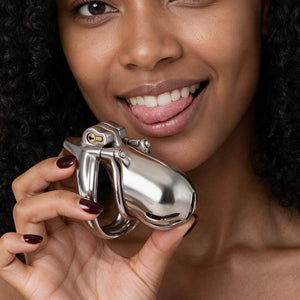
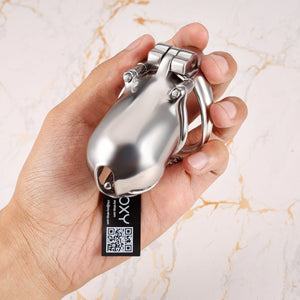
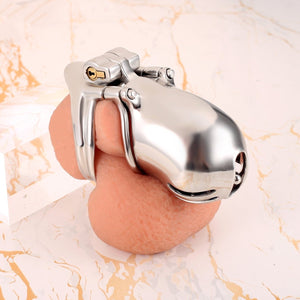
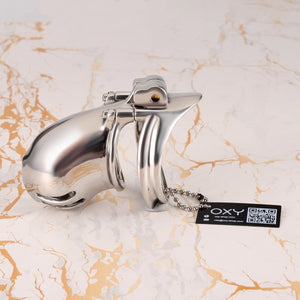
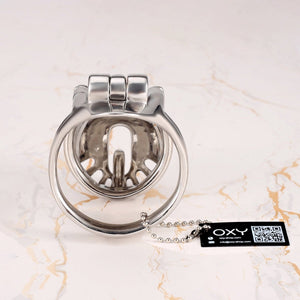
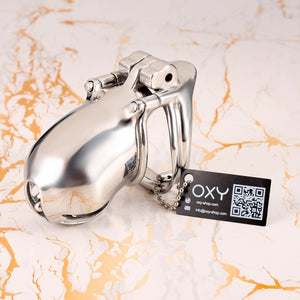
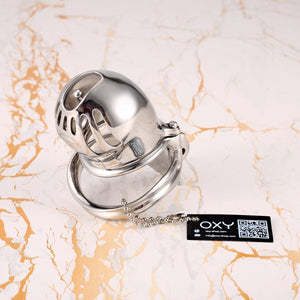
Obsidian PA – Cage de chasteté en acier sur mesure avec verrou PA intégré

Choisis les variantes s'il y en a

Obsidian PA – Cage de chasteté en acier sur mesure avec verrou PA intégré

L’Obsidian PA incarne le contrôle absolu — lisse, enveloppante et inébranlable.

Chaque cage estfabriquée sur mesure selon vos mesures,imprimée en 3D en acier inoxydable de qualité chirurgicale etfinie à la main avec un poli miroir profond digne de son nom.

Son élément distinctif est le verrou Prince Albert intégré, forgé directement dans la structure de la cage. Ce mécanisme conçu avec précision garantit une sécurité absolue — aucun mouvement, aucune échappatoire, seulement une connexion parfaite entre la personne qui la porte et l’acier.

Inspirée par l’élégance sombre de la pierre d’obsidienne, ses lignes fluides et sa forme enveloppante offrent un confort inégalé et un confinement total. Conçue pour un port prolongé, l’Obsidian PA allie précision ergonomique et présence sculpturale imposante.

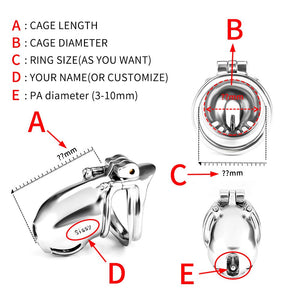
INSTRUCTIONS DE MESURE


Pourquoi choisir cette cage

  • Entièrement fabriquée sur mesure, adaptée à votre anatomie

  • Verrou PA intégré pour une sécurité et une stabilité optimales

  • Imprimée en 3D en acier inoxydable de qualité chirurgicale

  • Polie à la main pour un confort irréprochable et un profond éclat métallique

  • Conception ergonomique enveloppante pour un port prolongé

  • Conçue pour un contrôle total et une connexion indéfectible

✦ Essayage facultatif avant verrouillage : cage d’ajustement en nylon imprimée en 3D - PROTOTYPE

Vous voulez vous assurer que votre cage sur mesure vous va parfaitement ?

Avant de fabriquer votre dispositif en acier inoxydable massif ou en titane, vous pouvez choisir de recevoir une réplique d’ajustement en nylon — un modèle imprimé en 3D, identique à votre future cage. Vous pourrez ainsi vérifier la taille, l’anneau de base et le confort général avant la fabrication finale.

Cette option est fortement recommandée, surtout pour une première commande personnalisée.

Les prototypes d'ajustement sont des outils de mesure non fonctionnels, conçus uniquement pour tester les dimensions. Ils ne bénéficient pas de la finition finale, ne sont pas destinés à être portés longtemps et nous aident à perfectionner votre modèle définitif.


Matériau :

Acier inoxydable 316 de qualité médicale;Non poreux, sans danger pour le corps et inoxydable.

COMMENT PRENDRE VOS MESURES

Prenez les mesures plusieurs fois au cours de la journée, puis faites-en la moyenne. Mesurez-vous lorsque vous êtes au repos.

Longueur totale de la cage : Prenez une règle et placez-la sous votre pénis au repos, en mesurant de la pointe à la base. Vous devez être complètement au repos pour prendre cette mesure. Pour obtenir des résultats précis, prenez cette mesure plusieurs fois au cours de la journée. Retirez 1/4 inch ou 6mm de cette mesure.

Diamètre intérieur de la tige : Mesurez le tour de la verge avec un mètre ruban - serrez légèrement. Divisez par 3.14 pour obtenir le diamètre, puis ajoutez 0.11 inch ou 3mm

Taille de l'anneau de base : Prenez une ficelle non extensible et serrez-la autour de votre pénis et de vos testicules, de façon à ne pouvoir passer qu'un seul doigt en dessous. Mesurez la longueur de ce segment.
Vous pouvez aussi mesurer avec un mètre de couturière. Divisez la mesure par 3.14 pour obtenir le diamètre.


Vous êtes seul responsable de vos mesures. Nous n'acceptons ni les retours ni les réclamations si un dispositif n'est pas adapté.
Nous fabriquerons le dispositif avec un éventuelécart de 1 à 5 mm selon le dispositif.

Chaque cage de chasteté personnalisée est conçue et fabriquée sur commande. Veuillez prévoir 2-6 semaines pour sa fabrication.

Garantie sur les cages de chasteté
Comment mettre une cage de chasteté

Foire aux questions

A PA lock chastity cage is a male chastity device that secures through a Prince Albert piercing instead of relying only on the cage and base ring. The main benefit is stability. A properly designed integrated PA lock reduces internal movement, makes slipping out much harder, and creates a more fixed connection between the wearer and the device. This style is best for people who already have a healed Prince Albert piercing and want a higher-security chastity setup for long-term wear, stricter control, or a more serious submission dynamic. The Obsidian PA is built around that concept, with the locking mechanism integrated directly into a custom stainless steel cage rather than added as a separate attachment. The tradeoff is that PA cages are not beginner-friendly if you do not have the piercing, and precise measurements matter even more than with standard chastity cages. They also require good hygiene, body awareness, and realistic expectations about comfort during adaptation. For experienced wearers who want more security and less movement, this type of cage is often a strong choice.
A custom steel chastity cage is usually better if fit, long-term comfort, and security are your top priorities. Off-the-shelf cages can work for experimentation, but they are made to general sizes. That often means compromises in ring fit, cage length, internal diameter, and overall stability. A custom model like the Obsidian PA is made to your anatomy using your measurements. That matters because small differences in base ring diameter, shaft clearance, and cage length can affect daily comfort, circulation, chafing, and whether the cage stays secure during movement. Surgical-grade stainless steel also offers a durable, non-porous surface that is easier to keep clean than many lower-end materials. The tradeoff is that custom cages require accurate measuring and a longer production timeline. They also are not ideal for someone who is still figuring out what size or style they like. If you are new, a fit prototype can help. If you already know you want a serious chastity device for regular wear, custom is often the more reliable option.
It can be healthy for some people to wear a chastity cage long term if the fit is correct, the material is body-safe, and hygiene and circulation are monitored carefully. The biggest factors are proper sizing, daily cleaning, and paying attention to warning signs like numbness, discoloration, swelling, persistent pain, or skin breakdown. A well-made custom device can improve the odds of safer long-term wear because it reduces pressure points and unwanted movement. The Obsidian PA uses medical-grade 316 stainless steel, which is non-porous and rust-resistant, and its enclosed ergonomic shape is intended for extended wear. A custom fit matters here because a cage that is too tight or too loose can both create problems. Long-term wear is best for people who understand their body, can remove the device if needed, and are committed to safe BDSM practices. It is not a substitute for medical advice, and anyone with a piercing should also make sure the Prince Albert is fully healed before using a PA-based cage. Start gradually and prioritize health over endurance.
The best way to know if a custom chastity cage will fit correctly is to measure carefully, more than once, while fully flaccid, and use those averages to choose your final dimensions. The key measurements are total cage length, shaft diameter, and base ring size. Small errors can change comfort a lot, especially on a rigid steel cage. For the Obsidian PA, the recommended process is to measure several times throughout the day and average the results. The listed guidance also includes specific adjustments, such as subtracting about 1/4 inch or 6 mm from flaccid length and adding about 0.11 inch or 3 mm to shaft diameter after calculating it. Base ring size should be measured around the penis and balls with a snug but not overly tight fit. If you are unsure, a nylon fit prototype is one of the safest ways to test sizing before final production. That is especially useful for first-time custom buyers or anyone moving to a PA-integrated cage, where precision and comfort matter more than with basic beginner devices.
Stainless steel is popular for chastity cages because it is durable, non-porous, body-safe when properly finished, and easy to clean. Compared with softer or cheaper materials, it resists wear better, holds its shape, and gives a more solid locked-in feel that many users want for control-focused play or lifestyle wear. The Obsidian PA is made from 316 medical-grade stainless steel and hand-polished to a smooth mirror finish. That matters because surface quality affects daily comfort. A rough finish can create friction and hotspots, while a polished surface is typically easier on the skin and simpler to rinse and maintain. Steel also has psychological appeal for many wearers because it feels more permanent, disciplined, and secure than plastic or silicone. The tradeoffs are weight, rigidity, and travel concerns. Steel has no flexibility, so sizing must be right. It can also feel colder at first and may be less forgiving for complete beginners. For people who want a serious, long-lasting chastity device, stainless steel is often one of the strongest material choices.
You can physically travel while wearing a chastity cage, but going through TSA or airport security with a metal chastity cage is risky if privacy matters. A stainless steel device may trigger metal detectors or become visible during body scanning, which can lead to additional screening and uncomfortable questions. Because the Obsidian PA is a custom steel chastity cage made from medical-grade stainless steel, it should be treated as detectable metal for travel planning. There is no reliable way to guarantee that airport screening will ignore it. Even if one checkpoint is uneventful, another may not be. For most people, the practical advice is simple: do not wear a metal chastity cage through airport security if discretion is important. If travel is necessary, discuss removal plans with your keyholder in advance and think through backup options before leaving. This is especially important with PA-based designs, where removal may be less casual than with standard cages. Privacy, compliance, and safety should come first.
Yes, metal detectors can detect chastity cages, especially if the device is made from stainless steel. Detection is never something you should assume will or will not happen because airport systems, courthouse scanners, venue security, and handheld detectors vary widely in sensitivity. A device like the Obsidian PA is made from 316 stainless steel and includes an integrated locking structure, so it should be considered detectable metal. In addition to walk-through detectors, modern body scanners may also show the shape or outline of an object worn under clothing, which can prompt secondary screening. For shoppers choosing between materials, this is one of the main tradeoffs between steel and lightweight non-metal alternatives. Steel offers durability, security, and a premium finish, but it is not the discreet choice for security checkpoints. If your priority is strict control at home, steel makes sense. If your priority is travel discretion, you may want a separate travel-friendly option rather than relying on a metal cage.
An integrated lock is built into the structure of the cage rather than added as a separate external lock point. In practice, that usually means fewer moving parts, a cleaner profile, and a more secure feeling fit. It can also reduce shifting because the locking system becomes part of the actual design instead of an attachment. On the Obsidian PA, the integrated Prince Albert lock is the defining feature. It is engineered directly into the custom steel cage, which helps create a stable connection with minimal movement. For many experienced wearers, that matters more than just visual style. Less internal play can improve comfort during daily wear and make escape attempts more difficult. The tradeoff is that integrated systems demand more precision. The cage needs to be made correctly for your anatomy, especially with a PA setup. This type of design is ideal for wearers who want a stricter, more permanent-feeling form of control. It is less suitable for casual experimentation or anyone still deciding what size, style, or locking approach works best for them.
A PA chastity cage is usually not the easiest starting point for complete beginners. It is best suited to people who already have a fully healed Prince Albert piercing and want a more advanced, more secure chastity setup. The learning curve is steeper because fit, hygiene, and body awareness all matter more with a piercing-based design. That said, a beginner to chastity who already has PA experience may still choose this style if they want higher stability and lower escape potential from the start. The Obsidian PA is custom-made and designed for long-term wear, which helps with comfort compared with generic rigid cages. The optional nylon fit prototype is especially helpful here because it lets you test sizing before the final steel version is produced. If you are completely new to chastity and do not have a Prince Albert piercing, a standard non-PA cage is usually the simpler path. If you do have the piercing and want serious control, a custom PA cage can be an excellent next step, provided you measure carefully and ease into wear responsibly.
A stainless steel PA chastity cage should be cleaned regularly with warm water and mild soap, then dried thoroughly before continued wear. Because PA-based devices involve a piercing, cleanliness is even more important than with standard cages. Routine rinsing helps remove sweat, skin oils, and residue that can lead to odor, irritation, or skin problems. The Obsidian PA uses non-porous 316 medical-grade stainless steel, which is a strong material choice for hygiene because it does not absorb moisture the way porous materials can. Its polished finish also makes it easier to wipe down and inspect. During cleaning, check for redness, pressure marks, swelling, or any sign that the fit is no longer comfortable. Good maintenance also means using the cage realistically. Remove it when needed for deeper cleaning if your dynamic allows, and never ignore pain or circulation issues. For long-term wearers, a consistent hygiene routine matters just as much as material quality. A premium steel cage can support easier care, but safe wear still depends on attentive daily habits.